Showing posts with label carrots. Show all posts

Monday, October 8, 2012

Week 16: Pickled Red Cabbage, Kimchi Style


With the farm season winding down, and the vegetables piling up, I've been looking for ways to preserve the produce. Recently, that's meant a series of quick-pickle projects: beets, cauliflower, and cabbage. The tangy goodies will keep in the refrigerator for at least a couple of weeks -- our noshing notwithstanding.

For the cabbage, I tweaked a recipe for a pickled, but not fermented, kimchi. This is a mildly spicy kimchi; it's meant to be pantry clearing, not sinus clearing. The recipe starts off with what seems like an unholy amount of salt, but the final kimchi is not overly salty. That's because the salt is used to wilt the cabbage and to draw out some of its water. The salt is then rinsed off before the cabbage goes into the pickling brine.

I'm storing my kimchi in a couple of quart-size pickling jars, which fit nicely in my fridge, but shallow containers are probably better to keep the vegetables evenly submerged in the picking liquid.

Pickled Red Cabbage, Kimchi Style
(Adapted from Creative Loafing Tampa. Makes 8 cups. Note: the salt amount -- 1/2 cup -- is correct; most of the salt will be rinsed off after wilting the cabbage. Makes 8 cups.)

1 red cabbage, weighing about 2 pounds
1/2 cup Kosher salt
2 Tbsp chili paste (Sriracha)
4 cloves garlic, pressed or finely minced
1/2 cup sugar
Juice of 2 lemons
1/2 cup apple cider vinegar
1/3 cup plus 2 Tbsp low-sodium soy sauce
8 to 10 radishes, cut into matchsticks
2 cups thinly sliced onion
2 cups thinly sliced carrot
1 bunch scallions, cut into 1-inch pieces
1 bunch cilantro, roughly chopped

Cut the cabbage into quarters, remove the tough core, and slice the cabbage into bite-sized pieces. Toss the cabbage with the salt. Place the salted cabbage in a large colander; set the colander in the sink, or over a bowl or plate to catch any liquid, and let the cabbage drain for 30 to 45 minutes. Rinse the cabbage thoroughly with fresh water and drain well.

In a large bowl, whisk together the chili paste, garlic, sugar, lemon juice, vinegar, and soy sauce. Taste and adjust the seasonings as desired.

Add the wilted cabbage, radishes, onion, carrot, scallion, and cilantro to the pickling liquid and mix well. Transfer the mixture to a one-gallon resealable plastic bag and squeeze out the air. Place the bag flat in the refrigerator, so the liquid is distributed evenly among the vegetables, and let the mixture pickle for at least two hours, but preferably a day or two, flipping the bag periodically. Store the kimchi in shallow containers or pickling jars, mixing periodically if some of the vegetables are not submerged in the liquid.

Thursday, July 19, 2012

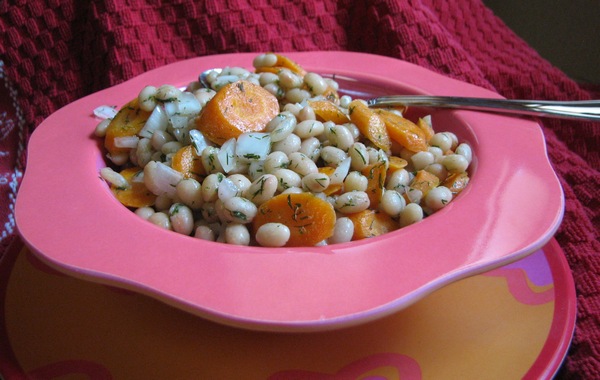
Week 5: Dressed Carrots and White Beans; No-Fuss Potato Salad


There's a certain irony in writing a food blog in the summer. The produce is great, but do you really want to turn on the oven when it's roasting outside? This week, in the interest of energy conservation (mine at least), I've been sticking mostly to salads and stovetop-prepared foods that let me get in and out of the kitchen (and blog) quickly. Here are two to try when you need something quick, easy, and good for a cookout or barbecue.


 Dressed Carrots and White Beans
(Adapted from 101 Cookbooks. Serves 3 to 4 as a side dish.)

1 Tbsp regular olive oil, plus a little extra for sauteing
1.5 cups slender carrots, sliced thinly on the diagonal (about 3 to 4 carrots)
1 15-ounce can small white beans, rinsed and well-drained
2 Tbsp finely chopped dill leaves
1 Tbsp light brown sugar
1 Tbsp fresh lemon juice
Dash salt
About 1/4 cup thinly sliced white onion (mild or sweet variety)

Heat a bit of olive oil in a large skillet over medium-high heat. Add the carrots and cook about 6 minutes, tossing occasionally, or until they begin to soften and brown. Add the beans and dill and cook about 3 minutes longer, or until the beans are heated through. Transfer the mixture to a serving bowl, sprinkle with the brown sugar, and stir gently; the sugar will dissolve. Whisk together the tablespoon of olive oil, lemon juice, and salt. Pour over the carrot-bean mixture. Stir in the onions. Serve warm or at room temperature.

No-Fuss Potato Salad
(A personal recipe, but inspired by several sources. Serves 4 to 6.)

2 lbs new potatoes, scrubbed clean but not peeled
3/4 cup mayonnaise
1 Tbsp apple cider vinegar
1/2 Tbsp white granulated sugar
1/2 Tbsp prepared yellow mustard
1/4 tsp table salt, or to taste
1/2 tsp garlic powder
1/4 tsp ground black pepper, or to taste
1 celery stalk, diced
1/2 cup diced white onion
2 scallions, sliced
Paprika

Boil the potatoes in a saucepan of salted water, 20 to 25 minutes or until fork tender. Drain and cool the potatoes, remove peels if desired, then cut the potatoes into cubes. Place the potatoes into a large bowl.

Mix together the mayonnaise, vinegar, sugar, mustard, salt, garlic powder, and black pepper. Pour over the potatoes. Add the diced celery and onions and stir gently to combine. Chill in the refrigerator. Before serving, garnish the potato salad with the sliced scallions and paprika.

Saturday, January 21, 2012

Baked Vegetarian Egg Rolls


If you are looking to duplicate restaurant-style egg rolls, this recipe probably isn't the one for you. "Baked" will not taste like "fried." But these egg rolls are good on their own terms: light, crispy, and a cinch to make. They're seasonal, too, both in terms of produce (cabbage) and holiday (Chinese New Year is around the corner). An added benefit (especially if you have been nibbling on these): The egg rolls can be made virtually fat free, depending on your brand of egg roll wrappers and whether you use canola oil or cooking spray.

Baked Vegetarian Egg Rolls
(Adapted recipe. For a shortcut, substitute 2 cups cole slaw mix for the shredded cabbage and carrots. Makes 8.)

Canola oil or cooking spray
1 cup shredded or chopped green cabbage
1 cup shredded carrot
1 cup mung bean sprouts, coarsely chopped if especially long
1/2 cup chopped water chestnuts (approximately one-half of an 8-ounce can)
1/2 tsp grated fresh ginger
1 Tbsp soy sauce
2 Tbsp water
1/2 Tbsp corn starch
2 green onions, sliced
8 egg roll wraps
Additional water for sealing egg rolls

Heat a teaspoon of oil, or use cooking spray, in a large slope-sided skillet or wok over medium heat. Add the cabbage, carrots, bean sprouts, water chestnuts, and ginger to the skillet and cook, stirring frequently, for about 4 minutes or until the vegetables begin to wilt slightly but retain crispness.

Combine the soy sauce and water; stir in the corn starch thoroughly so there are no lumps. Add this mixture to the pan along with the green onions and cook for 1 to 2 minutes, or until the sauce thickens. Remove the vegetable mixture from the heat and let cool.

Preheat your oven to 400 degrees. Spray a baking sheet with cooking spray.

Fill each egg roll as follows: Position the wrap in front of you so that it looks like a diamond. Place two rounded tablespoons of filling across the lower section of the wrap, avoiding the edges. Fold the bottom up over the filling, then fold in the two sides. Moisten the top edges of the wrap with a little water (a small pastry brush is useful here) and roll the wrap up, sealing the flap. Place each filled egg roll, flap-side down, on the baking sheet. Spray the top of each egg roll with cooking spray (or brush lightly with canola oil).

Bake 8 to 10 minutes, then turn the egg rolls over. Bake another 5 to7 minutes or until crispy and golden brown. Serve with duck sauce, Chinese mustard, or a soy sauce-based dipping sauce of your choice.

Wednesday, July 13, 2011

Week 5: Fresh Pea Soup

Lots of good stuff in the share this week: Lettuces for salad, beets for roasting, onions for sauteing, summer squash for stuffing, more squash for roasting, and raspberries (yes!) for eating out of hand while cooking all that other stuff. Plus, a good friend gave us a taste of her CSA with a gift of some beautiful scallions and fennel and chard and herbs, in exchange for a couple of squash and some peas.

Let me tell you about the peas. Caboodle and I have shelled a good 10 pounds of peas over the past two weeks. We may have reached the end of the season, as the pea pods this week were positively enormous -- a tad overgrown, really -- with individual peas the size of chickpeas. Still, the peas were nibble-worthy raw, and even better in soup.

Split pea soup, made from dried peas, is definitely stick-to-your-ribs, cold-weather comfort food. I found fresh pea soup, on the other hand, to be something of a revelation: far lighter, more delicate, and quick to cook. As hot soups go, this is a plausible one for a summery day.

Fresh Pea Soup

(Inspired by Ina Garten)

1 Tbsp butter
1 Tbsp olive oil
2 cups chopped onion
1 medium carrot, chopped (about 1/2 cup)
4 cups vegetable stock
5 cups shelled fresh peas
2/3 cup chopped mint leaves (loosely packed)
2 Tbsp fresh lemon juice, or to taste
Salt and pepper, to taste
2 Tbsp chopped chives, for garnish (optional)

Heat the butter and olive oil together in a large soup pot or Dutch oven over medium heat. Add the onion and carrot, and cook for 5 to 10 minutes or until the vegetables soften. Add the stock, raise the heat to high, and bring to a boil. Add the peas, lower the heat, and simmer the soup until the peas are tender, 3 to 5 minutes, depending on size. Remove from the heat and add the mint.

Let the soup cool a couple of minutes, puree it in batches in a blender or food processor, and return it to the soup pot. Add the lemon, salt, and pepper, adjusting seasonings to taste. Reheat the soup if necessary, and serve hot, garnished with chive if desired. Serves 6.

Thursday, July 1, 2010

Week 3: Beet Salads, Cooked and Raw

Excuse me a moment while I finish a yummy sandwich: Hummus, cucumber (nom, nom, nom), radish and arugula on whole wheat pita. Dang, I'm going to have to make more hummus to go with the leftover vegetables.

It's been a busy week in the kitchen of Chez Swiss Chard -- temporarily dubbed Hotel de la Chard over the weekend for Caboodle's belated birthday sleepover party. Aside from the party cooking (pasta and salad dinner, chocolate souffle cupcakes, breakfast buffet with pancakes and home fries), the CSA-specific rundown went something like this:
  • Steamed peas
  • Grilled zucchini and summer squash
  • Plenty of salad (Romaine, arugula, mixed salad greens)
  • Stuff added to salad (radishes, summer squash)
  • Stuff added to sandwiches (radishes, lettuce, arugula)
  • Raw beet salad
  • Braised greens (collards and beets), and ...
  • 2 Chocolate zucchini cakes (wrapped and frozen for later this summer)
I like the fact that beets are a two-for-one deal. If you need ideas for the greens, remember that beets are related to Swiss chard, and you can use the greens in much the same way.

Having received beets both this week and last, we tried out two very different takes on beet salads. We'll start with Week 2's salad, pictured above. (We made just a half-batch, enough for 3 or 4 servings.)

Beet Salad With Oranges and Beet Greens
(adapted from Bon Appetit)

Leftovers taste fine, but the vibrant color fades with refrigeration.

6 medium beets, washed and trimmed, greens reserved
2 seedless oranges, peeled and sectioned
1 sweet onion, peeled and sliced thinly
1/3 cup red wine vinegar
1/4 cup extra virgin olive oil
2 garlic cloves, minced
Salt and pepper to taste

Roast, steam or boil the beet roots, depending on your cooking preference and how hot it is in your kitchen. Cool, then peel the beets, and cut into wedges. Coarsely chop the greens, discarding the stems. Cook the greens in a large pot of boiling water until tender, about 2 minutes. Drain, cool, and squeeze out any excess moisture. Combine the beets and greens in a bowl. Add the orange segments and sliced onion. Whisk the vinegar, olive oil, and garlic; dress the salad. Let stand at room temperature 1 hour before serving.

This week's salad:

Raw Beet Salad
(adapted from a Mark Bittman recipe, via Serious Eats)

1/2 lb beets
1/2 lb carrots
1/2 onion
1 Tbsp minced ginger root
2 tsp Dijon mustard
1 Tbsp canola oil
2 Tbsp fresh lime juice
1/4 cup chopped cilantro
Salt and pepper to taste

Peel the beets, carrots, and onion. Combine them in a food processor and pulse until chopped, or grate the vegetables separately. Place in a bowl and add in the ginger. Combine the mustard, oil, and lime juice, and add to the salad, tossing to coat. Mix in the cilantro. Adjust the seasonings and serve.

Friday, June 4, 2010

The Parsley Challenge

chickpea saladI don't garden much, but over the years The Programmer has planted a variety of herbs. The ones that grow best for us -- parsley, chive, oregano -- are all perennials that survive despite neglect. I use them when I can, but the parsley is a bit of a challenge, because it grows so abundantly and The Programmer doesn't particularly care for it. That means I'm in need of good recipes that get rid of a lot of parsley at once.

Chimichurri is one option, as is tabbouleh (though I'm the only one here who really likes it). This week I came across a salad recipe that I'm adding to my list. It features not only parsley, but also radishes, another early-spring ingredient. The Programmer declared this one a keeper.

Chickpea, Carrot and Parsley Salad
(slightly adapted from Fine Cooking magazine)

1 can (15.5 ounces) chickpeas, drained and rinsed
1 cup flat-leaf parsley leaves, coarsely chopped (stems discarded)
1 cup shredded carrot
1/2 cup sliced radishes (1 bunch, or about 6 radishes)
1/2 cup chopped scallions (white and green parts of about 4 scallions)
3 Tbsp fresh lemon juice
1 tsp. ground coriander
1/2 tsp kosher salt
Black pepper, to taste
6 Tbsp extra virgin olive oil

Put 1/2 cup of the chickpeas into a bowl and mash them coarsely. Stir in the remaining chickpeas, parsley, carrot, radishes, and scallions.

Using a small whisk or fork, combine the lemon juice, coriander, salt, black pepper, and olive oil. Pour over the salad and toss gently. Adjust seasonings if necessary and serve.

The salad keeps fine overnight. Serves four as a side dish.

Tuesday, January 26, 2010

Back to Our Roots

root vegetablesGotta love New England in January. Snow, drizzle, flurries, a peek of sunshine, a little thaw, some freezing rain. And that was just one afternoon last week.

Perfect weather for some ice cream. The girls and I have been treating ourselves to sundaes, but it's not a long-term strategy. So in between the frozen treats I've been focusing on stews and casseroles and roasts. Root vegetables have starred in several of these meals; not only are they widely available this time of year, but they also hold up well in the long-cooking, kitchen-warming dishes that I reserve for winter.

We found an array of root vegetables and other wintry things (like squash, and, um, gelato!) at the winter farmers' market in Wayland. It's worth a visit if you are in the area, but go early: We apparently missed out on some greenhouse-grown Swiss chard.

Part of the farmers' market haul wound up in this stew:

Vegan (and Fat Free) Winter Vegetable Stew
(adapted from the International Vegetarian Union web site)

Peel and cube:
1 rutabaga
3 turnips
3 to 4 carrots
1 sweet potato
2 to 3 white potatoes

Chop:
1 large onion

Rinse well:
1/2 cup barley

Put everything into a large stew pot (mine holds 8 quarts), and add water to cover (about 11 cups). Bring to a boil, then lower heat and let simmer for about an hour, until all is nearly tender.

Add:
1/3 cup red lentils
1 tsp dried sage
1 tsp dried rosemary
1 tsp dried tarragon
salt and fresh ground black pepper to taste

Simmer until the lentils have cooked, fallen apart and thickened the stew, about 20 minutes. Add more water if necessary.

Notes: The recipe yields a ton (about 16 cups), so keep that in mind if you have a vegetable-averse household. Like most stews, this one tastes even better the second day. Leftovers will continue to thicken because of the barley.

Saturday, December 26, 2009

Soup's On

Mother Wolff SoupI make soup all year round, but I love, love, love soup on a cold day. My pantry is stocked with dried peas and lentils for spur-of-the-moment pots of goodness, but sometimes I break out more time-consuming recipes. On a rather blustery day, Mother Wolff Soup simmered on my stovetop for about four hours, requiring only the occasional stir. The soup came out more brothy than I expected -- especially in light of the ingredient list: lima beans and barley and rice and potatoes. Still, Kit went for a second bowlful, and leftovers improved from sitting in the fridge for a day or two, so the recipe is a keeper.

A much quicker soup is Vegetarian Split Pea. It's stick-to-your-ribs thick and it goes from pantry to table in less than an hour.

Mother Wolff Soup
(adapted from Sundays at Moosewood Restaurant)

4 quarts water
1/2 cup dried lima beans, soaked overnight
1 cup cooked rice
1/2 cup barley
4 large garlic cloves, minced
1 Tbsp dried dill
1 bay leaf
2 Tbsp vegetable oil
1 cup diced onions
1 cup chopped celery
1 Tbsp sweet paprika
1 cup diced potatoes
1 cup diced carrots
1/2 tsp salt
ground black pepper
1 cup frozen peas
1 cup chopped canned tomatoes
1/4 cup chopped fresh parsley

In a large soup pot, combine water, drained limas, rice, barley, garlic, dill, and bay leaf. Bring to a boil, then lower heat, cover and simmer for 1.5 hours.

About an hour into the simmering time, heat the oil in a large frying pan and saute the onion and carrots for a few minutes. Mix in the paprika, potatoes, carrots, salt, and pepper. Cover and cook for a few minutes, stirring frequently, then add in the peas and cook, covered, a few minutes more.

Remove the bay leaf from the soup pot and add in the sauteed vegetables, tomatoes, and parsley. Add more salt and pepper if desired. Simmer the soup, on low heat, for another 1.5 to 2 hours, stirring occasionally.

Vegetarian Split Pea Soup
(adapted from various recipes)

1 Tbsp olive oil
1 large onion, diced
1 carrot, diced
7 cups water
1 lb dried split peas
1 Tbsp fresh thyme
Juice of one-half lemon (or more, to taste)
1/2 tsp to 1 tsp salt
Paprika to taste

In a 5-quart Dutch oven, heat the olive oil over medium-high heat and saute the onion and carrot until they begin to soften, about 5 minutes. Add the water, peas, and thyme to the pot; bring to a boil, then lower the heat and simmer the soup for about 40 minutes or until the peas are soft, stirring occasionally.

Measure out 4 cups of soup and puree them in a food processor. Return the pureed soup to the remaining soup in the pot. Add salt, lemon juice, and paprika to taste. (For a "meaty" taste, try this with smoked paprika. Or, for another flavor profile, leave out the paprika and sprinkle in curry powder.)

Wednesday, September 16, 2009

All in One

I usually make chili or soup if the vegetables start piling up in the fridge, but in a moment of inspiration Tuesday night I paired vegetables, bulgur wheat, and beans for a satisfying meatless meal. I present to you ...


In-Grained Veggies

Ingredients

1 cup dry bulgur wheat, coarse grain
1.5 cups boiling water
1 Tbsp olive oil
1 medium red onion, diced
2 large carrots, diced
1 clove garlic, minced
1 jalapeno pepper, seeded and minced
1 Tbsp chili powder
1 tsp cumin
1 Japanese eggplant, quartered lengthwise and cut into small chunks
4 plum tomatoes
1 cup canned pinto beans, drained and rinsed
1 15-ounce can black beans, drained and rinsed
1/4 cup chopped cilantro leaves
Salt and pepper to taste

Directions

Put the bulgur into a bowl or 4-cup measuring cup and pour the boiling water over it. Cover and set aside for 30 minutes or until the bulgur absorbs the water.

Heat the oil in a large skillet over medium-high heat. Add the onions, carrots, garlic, jalapeno, chili powder, and cumin. Cook, stirring, 2 to 3 minutes or until the carrots begin to soften.

Add the eggplant, tomatoes, and beans. Simmer 10 minutes or until the eggplant softens. Add the bulgur and cilantro and heat through, another 2 to 5 minutes. Taste to adjust seasonings and serve.